April 2026 TAT Forum

This month’s contents include:
Convictions & Concerns: Feedback on the Spiritual Path, by Alex S.
TAT Foundation News: Including the calendar of 2026 TAT events and a listing of local & online group meetings organized by TAT members.
Humor
Inspiration & Irritation
Reader Commentary: What do you hope for most in life? What would a third-party witness to your life conclude was your main hope?
Founder’s Wisdom
In-Person TAT Gatherings will be held at the Claymont Retreat Center for 2026.
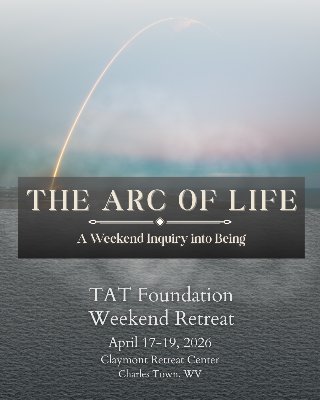
April 2026 TAT Foundation In-Person Gathering
Friday-Sunday, April 17–19, 2026
Charles Town, WV

Keep informed of TAT events and receive our free monthly Forum filled with inspiring essays, poems and images.
Sign Up Now

(As an Amazon Associate, TAT earns from qualifying purchases made through links on our website … or save this link to use.)
Note for Forum readers regarding email links: If you click on an email (mailto:) link and it doesn’t automatically compose the start of an email response, a right-click may give you an option to indicate an email app and/or an option to copy the link address which you can paste into an email that you initiate.
Convictions & Concerns
TAT members share their personal convictions and/or concerns
Feedback on the Spiritual Path
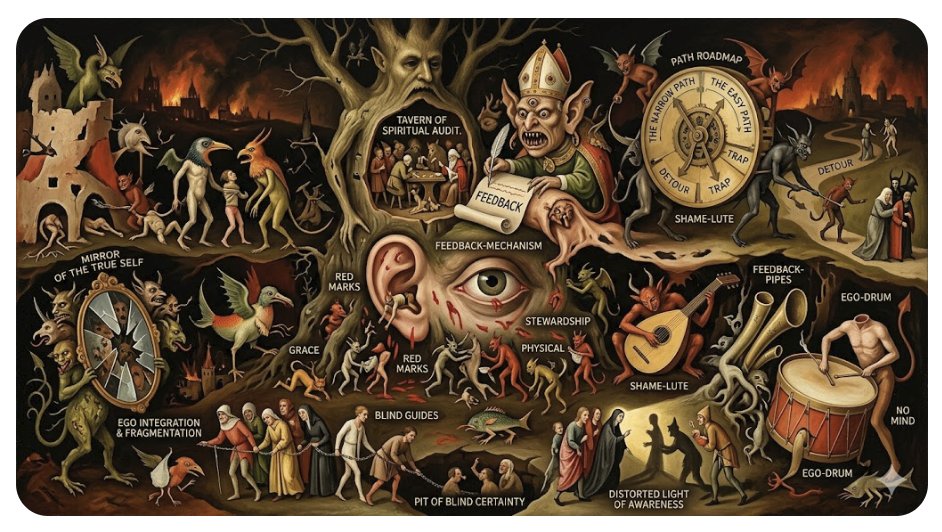
I am puzzled whenever I see people refer to ‘deliberate practice’ in connection with spiritual search. The term ‘deliberate practice’ was introduced by the psychologist Anders Ericsson [1] to describe practice in fields with ‘universally accepted, objective ways to measure excellence’ and ‘highly developed, broadly accepted training methods’. Chess and playing a musical instrument are good examples of such fields, but spiritual search does not strike me as one.
Granted, as the term became popular, it lost its original narrow meaning [2]. Ericsson also wrote about ‘focused practice’ that requires four things: well defined, specific goals, focus, feedback, and getting out of one’s comfort zone. I suspect these are what most people mean by practice. Of those four, I will consider feedback. What is good feedback is a difficult problem even in straightforward examples of practice. But some principles appear to be common sense. When I practice to achieve a goal, the feedback should tell me whether I am getting closer. The more immediate and actionable the feedback, the more quickly I can correct mistakes and the faster I can reach my goal.
1] A. Ericsson and R. Pool “Peak: Secrets from a new science of expertise”, Houghton Mifflin Harcourt (2016)
[2] It has not stopped people from claiming that the conclusions reached by the study of deliberate practice in its original, narrow sense are valid elsewhere. One of them is the ‘10,000 hours rule’, which is often taken to mean that 10,000 hours of practice are required to achieve mastery in any field. If one spends 10,000 hours practising the wrong thing in the wrong way, one is more likely to end up being mediocre. Clearly, access to those ‘highly developed, broadly accepted training methods’ is key.

~ Thanks to Alex S, who also produced the image, using Google Gemini AI, in the style of Hieronymus Bosch … like the Hell panel of his Garden of Earthly Delights triptych. Alex says it’s the closest to his current feeling about the spiritual path. Please email reader commentary to the TAT Forum.

TAT Foundation News
It’s all about “ladder work” – helping and being helped
Richard Rose, the founder of the TAT Foundation, spent his life searching for the Truth, finding it, and helping others to find their Way. Although not well known to the public, he touched the lives of thousands of spiritual seekers through his books and lectures and through personal contacts with local study groups that continue to work with his teachings today. He felt strongly that helping others generates help for ourselves as well in our climb up the ladder to the golden find beyond the mind.
Call To Action For TAT Forum Reader
With the intention of increasing awareness of TAT’s meetings, books, and the Forum among younger serious seekers, and to increase awareness of ways to approach the search for self-definition, the TAT Foundation is now on Instagram.
You can help! A volunteer is producing shareable text-quote and video content of Richard Rose and TAT-adjacent teachers. We need your suggestions for short, provocative 1-3 sentence quotes or 1 minute or less video clips of people like Richard Rose, Art Ticknor, Bob Fergeson, Tess Hughes, Bob Cergol, Shawn Nevins, Bob Harwood, Anima Pundeer, Norio Kushi, Paul Rezendes, Paul Constant, Mike Gegenheimer & other favorites.
Please send favorite inspiring/irritating quotes—from books you have by those authors, from the TAT Forum, or any other place—to TAT quotes. If you have favorite parts of longer videos (ex: from a talk at a past TAT meeting), please email a link to the video and a timestamp.
Thank you!
TAT Foundation Press’s latest publication
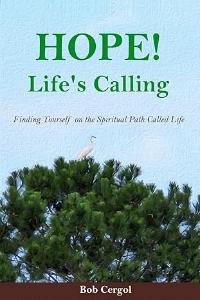
Hope! Life’s Calling: Finding Yourself on the Spiritual Path Called Life is a profound exploration of self-inquiry, personal clarity, and the search for life’s deeper meaning. The book invites readers to confront their deepest questions and engage in a journey of self-discovery, offering hope for understanding one’s true nature and purpose. Paperback and Kindle versions are available, and the audiobook is now available for purchase in the Amazon Store and on Audible.
“A one-of-a-kind guidebook written for the person who sincerely wants to discover their essence—to learn who or what they truly are at the core….” ~ Tara
“A masterpiece of a wake-up call, really a slap-in-the-face to almost all the books out there in the spiritual marketplace that claim to offer some variation of the perennial wisdom needed to seek Truth, Reality, Essence or Source….” ~ bk
Read their full reviews on Amazon. And please add your review to the Amazon listing. It makes a difference!
*
Other TAT Press publications also available as audiobooks:
1. Passages: An Introduction and Commentary on Richard Rose’s Albigen System
2. Solid Ground of Being
3. Beyond Relativity: Transcending the Split Between Knower and Known
4. The Listening Attention
5. Falling for Truth: A Spiritual Death And Awakening
6. This Above All: A Journey of Self-Discovery
7. A Handyman’s Common Sense Guide to Spiritual Seeking
8. Always Right Behind You: Parables & Poems of Love & Completion
9. Pouring Concrete: a Zen Path to the Kingdom of God
10. At Home with the Inner Self
11. Sense of Self: The Source of All Existential Suffering?
12. Message in a Bottle: Reflections on the Spiritual Path
*
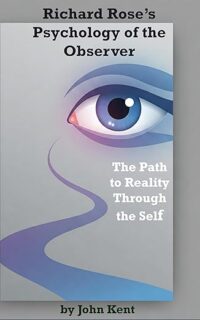
Now available as a Kindle edition. Also available to read online and in .pdf format on SelfDefinition.org and SearchWithin.org.
|
Random rotation of |
2026 TAT Meeting Calendar
January “TAT Talks” online event: Saturday, January 31, noon ET.
** April Gathering (Claymont Great Barn): Friday evening through Sunday noon, April 17-19, 2026 **
May “TAT Presents” online event: TBD.
June Gathering (Claymont Mansion): Friday evening through Sunday noon, June 12-14, 2026
July “TAT Talks” online event: TBD.
August Gathering (Claymont Mansion): Friday evening through Sunday noon, August 21-22, 2026
October “TAT Talks” online event: TBD.
November Gathering (Claymont Mansion): Friday evening through Sunday noon, November 6-8, 2026
December “TAT Talks” online event: TBD.
Our in-person gatherings in 2026 will be held at the Claymont Retreat Center in Charles Town, WV.
Comments or questions? Please email TAT Foundation events.

TAT’s YouTube Channel
Have you seen the TAT Foundation’s YouTube channel? Subscribe now for spiritual inspiration (and irritation)!
Volunteers have been updating the channel with hours of new content! They’ve also curated some great playlists of talks by Richard Rose, teacher talks from recent & not so recent TAT meetings, episodes of the Journals of Spiritual Discovery podcast, and other great TAT related videos from around the internet.
Featuring: Richard Rose, Bob Cergol, Shawn Nevins, Bob Fergeson, Mike Conners, Anima Pundeer, Norio Kushi, Paul Rezendes, Bob Harwood, Tess Hughes, Art Ticknor, Shawn Pethel, Tyler Matthew and other speakers.
This month’s video features a short statement by Shawn Nevins:
Local Group News
Groups with recently updated information are listed below. The complete listing of local groups is on the Find a Local Group page.

 Update for the Online Self-Inquiry Book Club:
We’re still looking for suggestions that have sufficient appeal. You can contact us at: https://meet.google.com/eqp-zucx-oww.
Update from the Pittsburgh, PA self-inquiry group:
> Use the e-mail link below for invitations to all meetings and to receive internal email announcements.
> In-person bi-weekly meetings: our home for all future meetings is the Library of The Friend’s Meeting House in Oakland, Pittsburgh: 4836 Ellsworth Avenue, PA 15213. Current events are listed on Meetup “Pittsburgh Self-inquiry Live” and http://www.pghsig.org.
– Sun, Apr 12, 2PM: “What is the point of questioning reality if it makes us uncomfortable?”
– Sun, Apr 26, 2PM: “What do I really really want out of my life?”
> Online group confrontation and individual contributions every Wed, 8:00 pm EDT via Zoom; current online events are listed on Meetup “Pittsburgh Self-inquiry Group” and http://www.pghsig.org.
> All Forum subscribers are welcome to join us.
> Email to receive weekly topics with preparatory notes and Zoom invitations. Current events are listed on Meetup as Pittsburgh Self-inquiry Group (link above) and on Pittsburgh Self-Inquiry Live.
> We advocate self-inquiry, which is to question our beliefs and opinions of ourselves and those of others through honest and sincere feedback all in a friendly environment in order to recognize errors in our thinking and assumptions. Each participant gets an allotted time to voice their thoughts on the evening’s topic to which others can question or comment.
> Our format and inspiration for self-inquiry are influenced by numerous teachers and books, none more so than the teachings of Richard Rose which can be researched here: Our format and inspiration for self-inquiry are influenced by numerous teachers and books, none more so than the teachings of Richard Rose which can be researched at TAT (Truth & Transmission) Foundation.
*
See the complete listing of local groups on the Find a Local Group page.
Members-Only Area
A password-protected section of the website is available for TAT members. (Note that there’s an occasional glitch that, when you try to link to the members-only area or a sections within it, you’ll get a page-not-found error. If you try the link a second time, it should work.) Contents include:
- How you can help TAT and fellow seekers,
- Audio recordings of selected sessions from 2008-and-on in-person meetings and virtual gatherings.
Resources and ideas for those planning a group spiritual retreat.
- Photographs of TAT meeting facilities, the Richard Rose grave site, a rare 1979 photo, and aerial photos of the Rose farm,
- Presenters’ talk notes from April TAT meetings in 2005–2007, and
- TAT News Letters from 1996–2013 and Annual Retrospectives from 1973 thru 2011. The Retrospectives from 1973–1985 were written by Richard Rose and are replete with ideas on the workings of a spiritual group—rich historical content.
- TAT policies, TAT business meeting notes, and other information.
New audio recordings added:
- December 2023 TAT Talk with Mike Gegenheimer.
- January 2024 TAT Talk with Bob Harwood.
- February 2024 TAT Virtual Event — Death, Dying, and Beyond.
- March 2024 TAT Talk with Norio Kushi.
- April 2024 in-person TAT Meeting.
- May 2024 TAT Talk with Paul Constant.
- June 2024 in-person TAT Meeting.
- July 2024 TAT Talk with Art Ticknor.
- August 2024 TAT Meeting – Running Between the Raindrops.
- September 2024 TAT Virtual Retreat – Love, Self-Inquiry, Prayer: Three Paths or One?
- October 2024 TAT Talk with Shawn Nevins.
Additions in November 2025: All 14 issues of the TAT Journal are now available in pdf format. Paperback issues of a “Forum for Awareness” were published on a quarterly basis from 1977 until 1980 and then on an annual basis until1986. The Journal’s editorial staff members, all of whom were volunteers, described the publication as a meeting place for…
 Esoteric searchers, transcendentalists, mystics, scientists for the new frontiers…
People who are dedicated to the development of genuine friendship among all levels of spiritual and psychological research…
People who see the need to share ideas, but who cannot meet personally, and for those who will give support and find support while seeking a common goal…
Specialists who see the value of broadening their perspectives by association with specialists in related fields and for people who, regardless of specialty, find a value in the psychological encounters with their fellows that help them to better understand themselves and so find peace of mind and a better understanding of their friends.
Please email TAT Foundation events if you have questions. (Look here for info on TAT membership.)
Amazon and eBay
Let your Amazon purchases and eBay sales raise money for TAT!
As an Amazon Associate, TAT earns from qualifying purchases made through the above link or other links on our website. Click on the link and bookmark it in your browser for ease of use.

TAT has registered with the eBay Giving Works program. You can list an item there and select TAT to receive a portion of your sale. Or if you use the link and donate 100% of the proceeds to TAT, you won’t pay any seller fees when an item sells and eBay will transfer all the funds to TAT for you. Check out our Giving Works page on eBay. Click on the “For sellers” link on the left side of that page for details.
Downloadable/rental versions of the Mister Rose video and of April 2012 TAT sessions on Remembering Your True Desire:
Your Contributions to TAT News
TAT founder Richard Rose believed that working with others accelerates our retreat from untruth. He also felt that such efforts were most effective when applied with discernment, meaning working with others on the rungs of the ladder closest to our own. The TAT News section is for TAT members to communicate about work they’ve been doing with or for other members and friends. Please your “ladder work” news.
Humor {(h)yo͞omər}
“One thing you must be able to do in the midst
of any experience is laugh. And experience
should show you that it isn’t real, that it’s a
movie. Life doesn’t take you seriously, so why
take it seriously.” ~ Richard Rose, Carillon

Irish Flu Shots

*
~ Thanks to Paul Constant. The image is shared across social media platforms like Reddit, Facebook, and Pinterest, particularly around St. Patrick’s Day.
.
Funny Movie Jokes
 “Roses are red, violets are blue, I’m a schizophrenic and so am I.” ~ Bill Murray in What About Bob? (1991)
“If we bury you ass up, I’ve got a place to park my bike.” ~ Robin Williams in Patch Adams.
“There’s no reason to become alarmed, and we hope you’ll enjoy the rest of your flight. By the way, is there anyone on board who knows how to fly a plane?” ~ Airplane! (1980)
“Just when I think you couldn’t possibly be any dumber, you go and do somethin’ like this — and totally redeem yourself! Ha Ha!” ~ Dumb & Dumber (1994)
*
~ Humor from a now-defunct website.
Southern Cooking

*
~ Sign for a restaurant near a Pilot truck stop in Van Horn, Texas , found on Facebook and other social media.
Inspiration & Irritation
Irritation moves us; inspiration provides a direction
Transcendental Poses
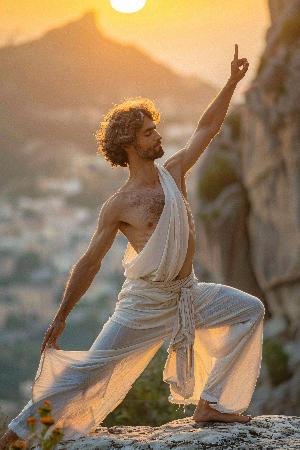
TAT founder Richard Rose wrote books and gave talks for years to detail his approach to spiritual realization. He laid out a roadmap, envisioned a ladder and provided a “Chart of the Detailed Steps” (in The Threefold Path). But sometimes, perhaps inspired by his youthful forays into scientific research, he provided a formula: a distillation of key factors into a short spiritual prescription.
Rose describes his approach as: “a system by which Truth is reached by the continual analysis (not breakage) of various transcendental poses, and by a constant vigil over the many factors within the self.”
That sentence from The Albigen Papers (in the opening paragraph of the Seventh Paper: Discernment) might sound a bit cryptic at first. Yet, Rose was pointing to a very practical way of working on oneself. His method is not about learning the Truth but is an invitation to seek truth based on careful observation, honesty, and inner investigation.
A spiritual seeker can think of Rose’s system as a disciplined form of self-inquiry combined with psychological honesty. The goal is not to become more spiritual but to discover what is actually true about the self and about reality.

~ Thanks to Michael Whitely, who added:
Over the years of seeking and experimenting with spiritual practices, I find myself seeing the wisdom of Rose’s prescription. We start not knowing. And all along the way we find ourselves exploring books, people and practices trying to find the answer. Trying to reach some kind of completion only to fall short and begin again. The path changes and we seem to change with it, but there also seems to be a limit to the progression. Something is not changing.
For me, now, there is only experience happening. Experience is aware of experiencing a sense of self and everything else. The content of experience changes but that may not matter at all because the experiencing remains the same.
Richard Rose once called this experience that we are having a “picture show.” So, I’m on the screen (and perhaps am the screen?) and the show continues.
The image is one of “philosophical pose” produced by Freepik.com AI.

Crowd-Following Algorithm
“Discover critical insights on Black Swan events and tail risk protection in this comprehensive financial education video.”
=> And critical insights on how our self-image and crowd-following may determine our actions:
1. “Let me tell you something about how your brain works because this is where the trap starts. Your brain evolved to notice the tiger in the room. It’s exceptionally good at detecting obvious threats. But what it’s catastrophically bad at is detecting threats that don’t fit the historical pattern.”
2. “ … your brain doesn’t change behavior based on abstract information. It changes behavior based on identity and skin in the game. Your brain says, “Well, if this is really true, then everyone would already be doing something about it. Nobody I know is doing anything. Therefore, it’s probably not true. Your brain is running a crowd-following algorithm masquerading as rational thought.”
=> CAUTION: Notice that the YouTube image includes a warning: Altered or synthetic content.
The content comes from The Antifragile Way: “a channel dedicated to exploring the powerful ideas of Nassim Nicholas Taleb: risk, uncertainty, antifragility, and decision-making in a complex world … a fan-made educational channel, not affiliated with Nassim Nicholas Taleb or any related entity.” It contains over 100 videos, many of which don’t seem to focus on Taleb.
Q: Do you see how Taleb’s view may apply to the process of self-inquiry into our real identity at the core of being?
Free Will? Free Won’t?
~ Thanks to Colm H., who commented:
I found this an interesting watch, a neurosurgeon’s perspective on the soul. It’s rare to see a scientist in that field going into this territory as Dr Egnor mentions himself in the interview. He goes into why he believes reason and free will aren’t functions of the brain but rather, as he says, they are functions of the soul. One item he covers in the interview which I found particularly interesting was with regards to the brain experiments conducted by Benjamin Libet (section starts at around 26:20). Most people are familiar with these well known experiments where, as a very rough paraphrase summary, it was measured that the brainwave for the desire to do something occurred in the brain half a second or so before the desire consciously registered in the person’s awareness. Therefore implying there was no free will involved.
However, I wasn’t aware, until watching this, that there was apparently another aspect to these experiments that was also measured, which Dr Egnor indicates that Libet himself called ‘Free won’t’. In brief summary, this indicated that while the brainwave for desiring something, say eating a piece of cake as he references, happens a half second or so prior to the action registering as a thought in the subject’s awareness, this was not the case for a decision in the mind to veto the desire. So while the signal for a potential desire was a measurable brainwave which was happening prior to it consciously registering in awareness, the decision to veto the same desire did not show up as a measurable brainwave. So, the conclusion being that the veto can’t be said to be happening in the brain. It seems that Libet did believe in free will, although he thought the brain as more of a tool that presents a ‘sea of velleities’ firing off as brain waves in the brain, and free will comes in with the person’s ability to accept or reject from the range of desires presented. Hence, why Libet referred to it as ‘Free won’t’.
Q: The split-second veto before a decision triggers action is witnessable, just as the decision-making process is witnessable. Does the researcher’s conclusion. based on current brain-monitoring equipment’s inability to detect it, convince you that it proves the existence of an individual continuity before birth / after death?
The One Question That Made Feynman a Genius
=> “Richard Feynman had an IQ of only 125 — not extraordinary by academic standards. Yet he became one of the greatest physicists in history….”
Q: What was Feynman’s approach to solving problems that was so different from most of his peers?
Q: Could it be applied to the problem of not knowing what we are at the core of our being?
Please your impressions of the above items.
Reader Commentary
Encouraging interactive readership among TAT members and friends
A reader wrote that what would make the Forum more interesting would be:
Hearing from people who are searching—and have questions instead of those providing endless advice and “answers.” What challenges they are facing. What their doubts and questions are. How they perceive their path is going. What they are doing in their lives. Where they think they will end up, etc., etc.
Can you help make the Forum more interesting?

The Reader Commentary questions for the April TAT Forum are from Bob Cergol:
What do you hope for most in life?
What would a third-party witness to your life conclude was your main hope?
Responses follow:
From Chitra D:
For a long time I focused (hope is not the right term, as least in my mind) on knowing the Truth, but currently I have dropped hope–or more accurately hope has just dropped by itself. I might say it has become redundant. I don’t mean this negatively. I just see that hoping for something/wanting something is not useful. (Hope is only a thought that rises and falls, that focuses on a future event that has no reality). What is to happen will happen, is happening every moment, and that is just fine. There is currently a sense of being in the present, witnessing what comes up. I try to keep the attention on that. And on “feeling” the Witness, the great Mystery. Meanwhile, whatever comes up in my life feels right. Not always pleasant, but right.
What would a third-party witness to your life conclude was your main hope?
I honestly don’t know.
From Dan G:
That it was OK all along, that it will ALWAYS be OK, and that everything is OK right now.
A third-party witness might say my main hope is to take me with me. The lyrics from “Nine Inch Nails’ Hurt” come to mind, “If I could start again a million miles away, I would keep myself. I would find a way.” This seems to be a desire I am a slave to, and so the deeper voice is a cowardice to “venture out to claim my heritage” as Douglas Harding puts it in his 8×8 fold Plebeian Path. A third-party witness might say there seems to be more of a main conflict than a main hope. Or perhaps the hope is I have a “heritage” worth claiming, held back by the fear of looking.
I really hope if I look, I won’t regret it. I am afraid to lose love. But love is happening, so is part of my heritage.
I claim it.
From MT:
My hope is to find my way Home to God where my heart is still and content…. free of worldly entanglements. Hope is like a buoy that keeps me from straying too far from the straight and narrow Way. I don’t know what a third party witness would conclude……I have no TAT friends or friends I feel are on the same journey as I am here in Australia. I can only see the hope vector from inside but hope does influence the choices and actions of my daily life. The hoping mode is still part of self but a useful self at the moment.
From Alex D:
I’ve found it a bit confounding and revealing how this question has evoked so much, and yet simultaneously so little that could be clearly stated. A part of me, confused, wants to default to all the stock (non-dual) answers… but I’d rather feel into it.
Feeling in, I hope most for: What the moment in the vipassana retreat pointed to… what the longing that moved me to wander in the woods called me toward… What the visions in college and in the jungle gestured to. What communion with lovers and Friends awakened, if only in moments. What rapports unveiled. The consummation of the longing captured in the Sacred Mirrors—luminous void, the twilight in the narrow crevice… the Silence in the canyons. What I was afraid to let go into at so many points along the way when the mind was quickened in stillness, connected with something greater than me, or stripped of its fortified vantage. I hope most for: The end of seeking. Resting in being. Coming home.
What would a third-party witness to your life conclude was your main hope?
I believe someone observing my life would report that what I hope most for is to help others through my work.
From Jenny C:
What do I hope for most in life? A balance of infinite love and joy and peace with the day-to-day challenges of managing an aging body and physical pain.
What would a third-party witness conclude was my main hope? I think they would conclude pretty much the same thing, based on my practices, actions, and words.
From Art Ticknor:
I first asked Google for a definition of hope, to focus on a perspective. Its AI Overview began with “to cherish a desire with anticipation, wanting something to happen or be true while believing it is possible.”
I’d say that what I hope for most in life is to be of help to family, friends, and strangers. I keep my metaphorical fingers crossed that my actions do more help than harm.
What would a third-party witness to your life conclude was your main hope?
For those not engaged with me in Truth-seeking, maybe to maintain my balance, both emotionally and—at my age—physically :-). With engaged seekers, maybe to disturb them (hopefully, in a productive way).
From Anima Pundeer:
Q: What do you hope for most in life?
A: I hope that I can live an uncompromised normal life.
Q: What would a third-party witness to your life conclude was your main hope?
A: I think a third-party witness to my life would see an ordinary person living an ordinary life.
From Bob Cergol:
It would not be surprising to me to learn that Forum readers found these very difficult questions to answer. They are as serious as it gets.
Answering them requires deep, even on-going, self-reflection. One must stop the charades and face whether one is serious about finding the Truth and discovering one’s true Self, or if one is more interested in accumulating power and glory, or a peaceful and comfortable existence. Obviously, the paired question suggests one is likely kidding oneself; that wishing isn’t the same as doing; that one’s doing is all-too-often at odds with one’s wishing – except in the case of all that enormous volume of doing to satisfy that extensive hierarchy of desires that begins in the glands and ricochets through the nervous system and coalesces into the mental construct of ego. It is one of the reasons I wrote a book [Hope! Life’s Calling: Finding Yourself on the Spiritual Path Called Life] on the subject. In it I pointed out that you are too busy being you in the world, too busy satisfying all the imposed tangential desires to see clearly where you are, who you’ve become, and how you got to wherever you find yourself now. It takes a truly serious commitment to answering the question to overcome the weight of inertia accumulated by the time the question even occurs to you or becomes of interest to you – after which it is easily forgotten in the business of being you in the business of life, aka satisfying desires (not answering questions). It takes a strong habit of trying to see oneself clearly to break the habit of deluding oneself. Don’t underestimate how deluded you are. You don’t know what you don’t know and don’t see what you can’t accept or that conflicts with your self-image. Do you see clearly enough to answer the questions posed that are consistent with each other?
Looking back on my own life I can see that even when I thought my answer to this question was that I hoped most for the Truth and for finding my true Self, that in fact my life seen objectively illustrated that my main hopes were apparently for things and outcomes other than finding Truth and my true Self. Yet, somehow, by taking small actions when I was reminded of my commitment, a counter-momentum developed, counter to the direction of working for peace and quiet and comfort. That momentum in turn became a reminder to me of my commitment, and my commitment grew stronger over the years and became self-reinforcing. The actions I took, the “doing” in service to my commitment had an impact upon my attention and upon its momentum and direction of its focus. Eventually that momentum became sufficient to at least counter the outward focus of attention on the accumulation of things and experiences that would bring pleasure, self-satisfaction, and comfort to the point that I became vulnerable to and accepting of seeing clearly who and what I really was. This doesn’t happen automatically by default. It only happens after these questions occur to you and you find in yourself, somehow, the wherewithal to go all-in on finding the answer to them.
From Mark C:
Through the process of negation, it is pretty easy to say that I know that I am going to die and that the only matter of importance leftover in my outward day-to-day life will be the quality of my relationships. As far as my inner life goes, I want an answer about what all of this really means or what true reality AKA Truth really is. I admit I am not chasing this with the passion of a drowning man, but I know there has been a big shift for me since I retired last year. It didn’t start right away as I was pretty busy last fall, but I started doing some things different at the start of December 2025 and started trying to keep to my commitments. I think this has helped, but the even bigger push has come from how much reflection I have been doing since the beginning of 2026.
Someone observing me would not necessarily see this because an internal process is not something that can be viewed. What they would likely see is that I have been sticking to a routine, trying to look after my health, and trying to get my house in order. I’m not sure that an outside viewer would be able to ascertain what my main hope was, but I think they would notice my attempts to be more disciplined.

=> The Reader Commentary question for next month, the May 2026 TAT Forum:
What question or questions would you like to ask people who say they are enlightened / know what they are / are Self-Realized / have no more questions / are Complete, etc.?
Please your response by the 25th of April, and indicate your preferred identification (the default is your first name and the initial letter of your last name). “Anonymous” and pen names are fine, too.
PS: What question(s) would you like to ask other TAT Forum readers?
Q: What are your thoughts on this month’s reader commentary? Please your feedback.
Richard Rose described a spiritual path as living one’s life aimed at finding the meaning of that life. Did you find anything relevant to your life or search in this month’s TAT Forum?

Dandelion burning. Image by Ervin Ervin Gjata from Pixabay.
We like hearing from you! Please email your comments, suggestions, inquiries, and submissions.
Sign up for notices of TAT’s four annual events, other virtual events, and free monthly Forums on our contact page.
Founder’s Wisdom
Richard Rose (1917-2005) established the TAT Foundation
in 1973 to encourage people to work together on what
he considered to be the “grand project” of spiritual work.
Faith and Science, part 2 of 2
by Richard Rose

Continued from the February 2026 TAT Forum:
When we look into the mirror and see our eyes looking—is the observer facing the mirror or facing eyes which are looking?
*******
Blessed are the blind for they shall never again have dual vision.
Blessed are the mindless for they shall never again suffer from dual mentation.
*******
Time is of your own making.
Its clock ticks in your head.
The moment you stop thought
Time too, stops dead.
*******
Man lives in the space between synapses.
The synapses are the contact points between mind and body.
*
Carillon: Poems, Essays and Philosophy of Richard Rose, © 1982 by Richard Rose. Image from freepik.com.
Definition of Terms

Index of many of the key terms and principles in Rose’s work, with brief definitions, from Richard Rose’s Psychology of the Observer: The Path to Reality Through the Self by John Kent.
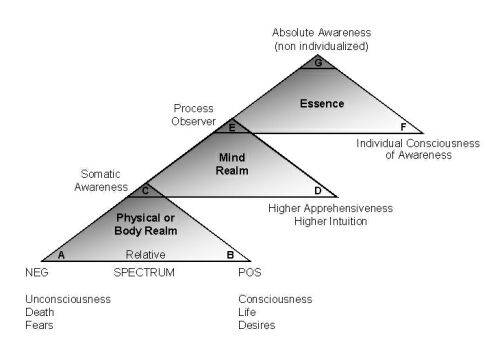
Jacob’s Ladder © 2001 Richard Rose. See this transcript of a talk on the topic by Rose.
Did you enjoy the Forum? Then buy the book!
Readers’ favorite selections from seven years of issues.
Beyond Mind, Beyond Death is available at Amazon.com.


Home | Richard Rose | Books & Recordings | TAT Forum | About | Search | Site Map