Richard Rose Obituary
Author, poet, philosopher, and founder of the
TAT Foundation and the Albigen System
Rose, Richard S., 88, formerly of Moundsville, WV, died Wednesday July 6, 2005 in the Weirton Geriatric Center. The family would like to express their deepest appreciation to the dedicated caregivers at Weirton Geriatric Center, Alzheimer and third floor care unit.
Richard Rose was born in his house in Benwood on March 14, 1917. He is the son of Richard V. Rose and Marguerite Orum Rose.
He attended St. Alphonsus and St. James schools until the age of twelve when he entered the Capuchin Monastery in Butler, PA.
At age 17, he left the monastery to finish his last year of high school at Wheeling Central Catholic. He enrolled at West Liberty State College to study English, then traveled the country taking various jobs in the field of chemistry and engineering.
At age thirty he married Phyllis West and raised three children, Ruth, Kathleen and James. He worked as a painting contractor in the Ohio Valley. He wrote his first book, The Albigen Papers, around the age of forty, but it was not published until 1973. Around the same year he began giving lectures on philosophy at colleges and universities across the country. Included among those universities were Harvard, Brown, Case Western, Kent State, UCLA, North Carolina State, Duke, and University of Pittsburgh. Study groups were formed at the various college campuses and students visited Mr. Rose in a regular basis.
At age sixty he married Betty Cecil Rose and they have a daughter, Tatia. Since the early seventies he published several more books, including The Direct Mind Experience based on his research on direct mind communication which he termed the direct-mind science. He also founded the TAT Foundation, a non-profit educational foundation based on his philosophic teachings.
Friends and family received Thursday from 3 -5 and 7 -9 p.m. at the McCoy-Altmeyer Funeral home, 44 Fifteenth Street, Wheeling, WV, where services will be held Friday June 8, 2005, with Mr. Lee O. Warfield, III, officiating. Interment will be at the family farm in Marshall County, WV.
In lieu of flowers donations may be made to Family Services of the Upper Ohio Valley, 51 11th Street, Wheeling, WV, 26003, and Altenheim Resources and Referral Center, 1359 National Road, Wheeling, WV 26003.
Goodbye, Mr. Rose
A special obituary written by David Weimer
A graduate student of philosophy at the University of Oslo in Norway played her violin at an open grave on Friday morning in rural Moundsville. It was a Scottish lament, or Irish Air, called Ashokan Farewell and it was featured in the Ken Burns documentary series on the Civil War. The haunting, nostalgic notes slid from Juliet Rose’s instrument to lap like gentle waves against the worn pier of 40 people standing there.
She was playing her fiddle at the graveside of her grandfather, Richard Stephen Vincent Rose Jr., of Benwood, known by many serious thinkers near and far as simply “Mr. Rose.”
Lee O. Warfield, III, of Baltimore visited Rose on his family farm in 1985 and found himself waiting for the man to return from an errand. “I had no photos of him, no preconceptions,” Warfield said. “When he walked into the room, I stood up and shook his hand. He said to me, ‘We’ve met before.’ And I knew that he knew me and knew everything about me.”
Twenty years after their first meeting, Warfield led a burial service for Rose on Friday that began at a funeral home and ended with interment at the Rose family farm. “It felt like I was giving him something,” Warfield said after the service. “I was very lucky to have met him, especially when I did. The morality that he preached saved my life.”
Rose is the author of six books on esoteric philosophy. The Albigen Papers, his seminal work, is an exposé of social, psychological, and spiritual misconceptions. Published in 1973 and written as a guide for others on the path of self-knowledge and realization, this work contains an examination of spiritual movements, blocks and aids to personal spiritual progress, and a large helping of common sense.
How did this Marshall County man become what many would call a guru or mentor?
It seemed to be his destiny. Richard Rose was born at home in Benwood on March 14, 1917 to Richard and Marguerite Orum Rose. He attended St. Alphonsus and St. James schools until the age of twelve when he entered the Capuchin Monastery in Butler, PA to become a priest. At 17, he left the Catholic monastery to finish a last year of high school at Wheeling Central Catholic. He enrolled at West Liberty State College and would eventually travel the country working in the field of chemistry and engineering.
As a young man, Rose had left the track he had been on to become a priest. He became, instead, interested in yoga and spiritualism. He was a voracious reader on subjects of esoteric philosophy, religion, psychology and mysticism. He made of himself a laboratory, abstaining from vices including alcohol and tobacco. He gave up eating meat. In short, he was a wandering mystic, meeting and joining any group that he felt he could learn from. He was on a quest for the riddle of his existence. In Seattle, in 1947, at the age of 30, he was “accidentally successful.”
Twenty-four cars made the half-hour journey from McCoy Funeral Home in Wheeling to the Rose family farm east of Moundsville.
Shawn Nevins is recreation coordinator for an outdoor team-building program in Louisville, KY. He drove five and a half hours to attend the funeral of a man who had been instrumental in his own search for meaning. In 1991, Nevins was in his early 20’s attending North Carolina State University. “I saw Rose’s picture on a poster for a lecture called, ‘What is Enlightenment?’ and it just got me curious. I wondered what it was all about.”
Nevins would eventually spend three years in Marshall County, where he could meet with Rose regularly. “It was inspiring and frustrating at the same time. Inspiring because here’s a person who I felt answered the questions that I had. Frustrating because for one, he can’t give me the answers—I’ve got to find the answers myself.”
This quiet-spoken Kentuckian said that Rose’s legacy lies in the people who he helped and in those who he set in motion on a philosophic path. People he inspired.
Rose founded the TAT Foundation, a non-profit educational organization based on his philosophy, in 1973 (TAT stands for Truth and Transmission). Today, TAT includes hundreds of members from throughout the U.S. and Canada. A number of its members attend four annual meetings near Moundsville.
After returning from Seattle to settle down, Rose married and spent two decades raising three children while working as a painting contractor in the Ohio Valley. He got his first book into publishable form in 1973. This same year, he began giving lectures on philosophy, Zen, psychology and mysticism at colleges and universities across the country including Harvard, Brown, Case Western, Kent State, UCLA, North Carolina State, Duke, Carnegie Mellon and the University of Pittsburgh. Study groups formed at various college campuses and students began to visit “Mr. Rose” at his farm in West Virginia on a regular basis. This would begin another two decades and more of a second career: engagement in his true interest of esoteric philosophy. Culturally, the door was open and people were ready to hear what he had to say on the subject.
Robert Cergol, of Raleigh, North Carolina, was 19 when he attended a lecture given by Rose. “I walked out of that lecture feeling like I had to reshuffle every viewpoint and thought I’d had up until that point. I was exposed to a world that I didn’t know existed. It seemed like it was the missing piece—in not knowing what I was supposed to do with my life.”
That was 30 years ago. Cergol graduated from college and would eventually live in Bellaire, Benwood and Moundsville. He worked for some time on a grounds crew for the Wheeling Park Commission and today is a self-employed software developer, married, and father of two girls.
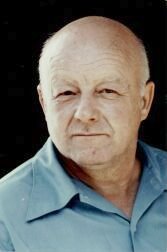
Richard Rose, 88, of Benwood, author, poet, philosophic authority and friend, died at 5:50 a.m. Wednesday July 6th at the Weirton Geriatric Center after a ten-year battle with Alzheimer’s. Decades earlier, when he was a young man, Rose had written a short poem that someone later would ask whether it was about his own death or not. Rose’s matter-of-fact reply was, “Oh, sure.” The poem is called I Will Take Leave of You. He is survived by his wife and children, grandchildren, great-grandchildren and truly, a host of friends.
- Read the Wikipedia biography on Richard Rose, including details about his teachings and influence.
- For a short, highly informative dive into Richard Rose’s teachings, read Passages: An Introduction and Commentary on Richard Rose’s Albigen System.
- Read After the Absolute: The Inner Teachings of Richard Rose by David Gold with Bart Marshall, including a Forward by Joseph Chilton Pearce. This fascinating account of one student’s years with Richard Rose is also available in paperback.